


Types of Leather: A Complete Guide to Understanding What You Buy
Not all leather is created equal. While two wallets might look identical at first glance, the difference between one that lasts ten years and another that peels after six months begins with the type of leather they are made from. This guide explains the most important types of leather, what each term means, and how it affects what you'll have in your pocket.

The 4 grades of leather: from best to worst quality
The most practical way to understand leather types is to know the four quality grades into which bovine leather, the most commonly used in leather goods, is classified. They are ordered according to the layer of the hide that is used: the more superficial the layer, the better the leather.
Full Grain
This is the highest quality leather. It comes from the outermost layer of the animal's hide and is processed without sanding or correction, thus retaining all of its original fiber density. This makes it extraordinarily durable: it does not tear, does not crack over time, and improves with use, developing a unique patina.
Full grain leather has small natural imperfections—marks, texture variations—which are precisely proof that you are dealing with authentic, untreated leather. If you're looking for a wallet that will last for decades, this is the material.
Top Grain
This is the second level. It also comes from the outer layer, but it is lightly sanded to remove imperfections and achieve a more uniform surface. In return, it loses some fiber density, making it slightly less durable than full grain.
It is the most common leather in medium-high quality products: bags, wallets, and accessories that seek a clean and homogeneous finish. It does not develop a patina in the same way, but it is still authentic and durable leather.
Genuine Leather
This is where the confusion begins. The term "Genuine Leather" sounds like a guarantee of quality—and technically it's not a lie—but in practice, it is the lowest level of real leather.
Genuine leather is obtained from the inner layers of the hide, once the upper layers (which will be used for full grain or top grain) have been separated. It is more porous, less durable, and its longevity is significantly lower. Manufacturers use it because it is cheap and because the name sounds good.
If you see a wallet labeled "Genuine Leather," do not interpret it as a sign of quality. It is quite the opposite: it is the lowest quality authentic leather available.
Bonded Leather
Bonded leather is not really leather: it is a mix of shredded leather fibers and scraps, glued together with adhesive and coated with a polyurethane layer to make it look like leather. It can contain as little as 10-20% real leather.
It disintegrates quickly—usually within one or two years of use—and cannot be repaired. Avoid it.
Comparative table of the 4 leather grades
| Type | Layer used | Durability | Develops patina | Price |
|---|---|---|---|---|
| Full Grain | Untreated outer layer | Very high (decades) | Yes | High |
| Top Grain | Sanded outer layer | High | No | Medium-high |
| Genuine Leather | Inner layers | Low | No | Low |
| Bonded Leather | Glued scraps | Very low (1-2 years) | No | Very low |
Types of leather by animal

The animal of origin also determines the characteristics of the final leather. These are the most common in leather goods:
Cowhide leather. This is the most widely used for wallets, bags, and belts. Durable, compact, and with a well-defined grain. The skin of young animals (calf) is finer and softer; that of adult animals is thicker and stiffer.
Goat leather. Finer and more flexible than cowhide, with a characteristic grain and excellent scratch resistance. Highly prized for gloves and slim-design wallets.
Lambskin leather. Extraordinarily soft and light, but less durable. It is primarily used in garments and accessories where touch is paramount.
Pigskin leather. Recognizable by its large, triangular pores. Commonly used in shoe linings and low-cost accessories.
Vegetable tanning vs. chrome tanning

Tanning is the process that transforms hide into leather: without tanning, the hide simply rots. The tanning method affects both the behavior of the leather and its environmental impact.
Vegetable tanning. This is the traditional method, which uses natural tannins extracted from tree barks (oak, chestnut, mimosa). The process takes weeks or even months. The result is a firm leather that absorbs oils and dyes well and develops a spectacular patina with use. It is preferred in high-end artisan leather goods. More than 90% of the leather we use at ROIK is vegetable-tanned.
Chrome tanning. An industrial process developed in the 19th century that uses chromium salts. It takes hours instead of weeks and produces softer, more flexible leather available in a very wide range of colors. More than 80% of the world's leather is tanned using this method. It is perfectly valid for many uses, although it generates more industrial waste.
If you value a wallet that improves over time and develops its own character, specifically look for vegetable-tanned leather.
What type of leather is best for a wallet?

This is the practical question that most guides do not directly answer. A men's wallet is exposed to very specific conditions: constant rubbing against pocket fabric, pressure, body moisture, and light. This demands a specific type of leather.
The best option for a wallet is full-grain vegetable-tanned leather. It is the only one that withstands daily rubbing without wearing out, that does not crack with moisture, and that, over time, develops a unique patina that makes the wallet look better the more it is used.
Top grain is a reasonable alternative if you're looking for a more uniform finish. Genuine leather begins to deteriorate within a few years. And bonded leather, quite simply, is not suitable for daily use.
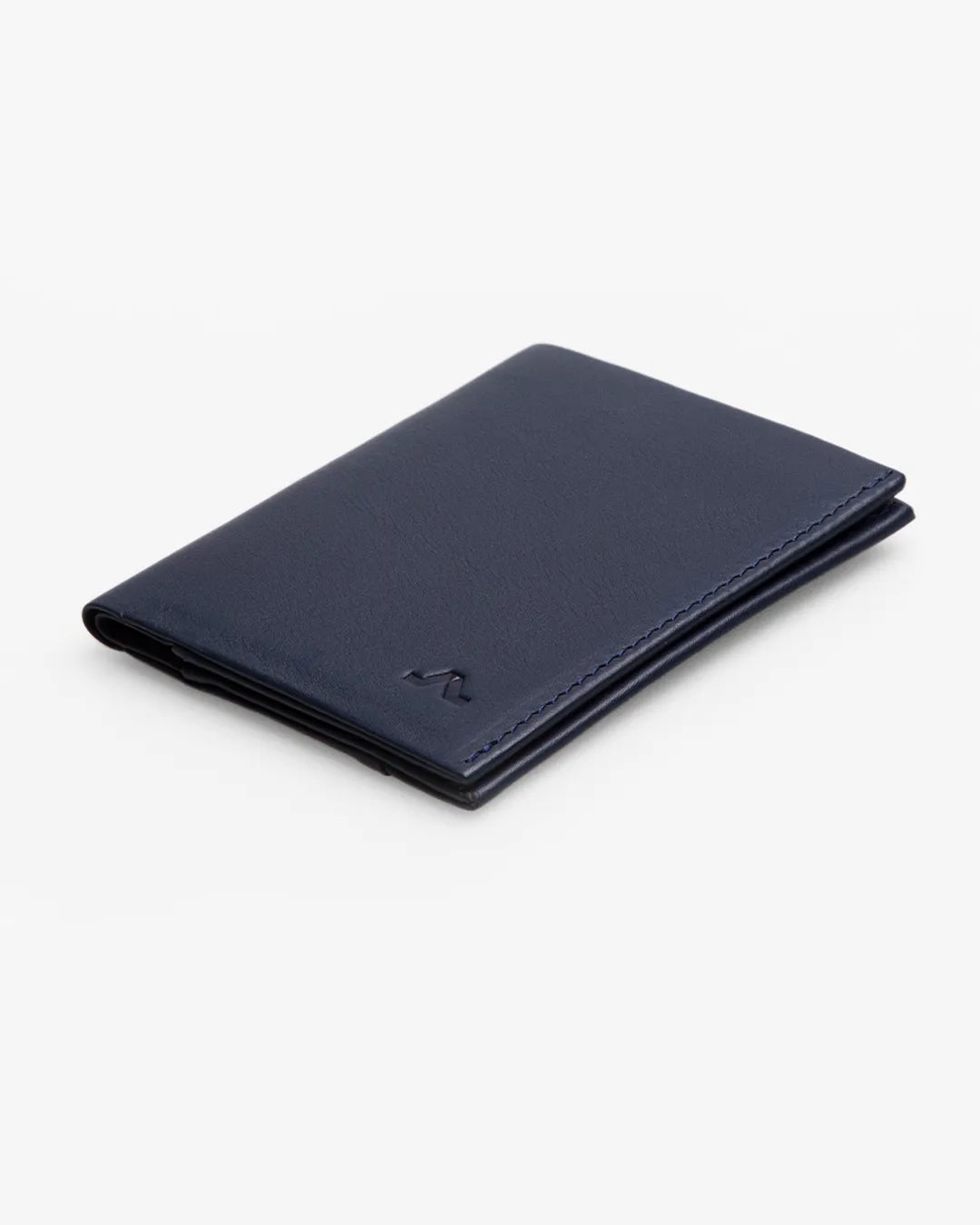
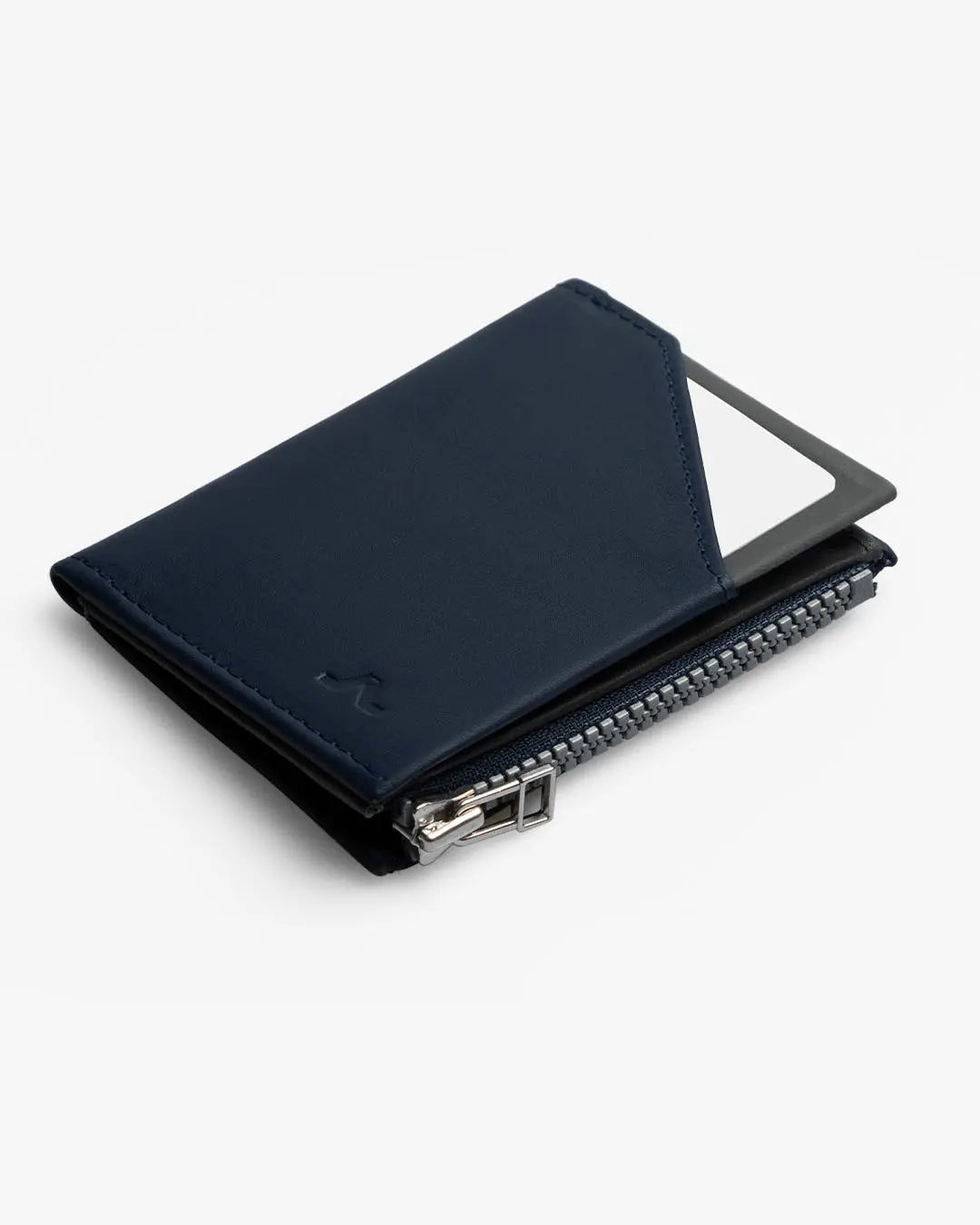
At ROIK men's leather wallets, we work exclusively with full-grain and top-grain leather, produced in Ubrique—the center of Spanish artisanal leather goods.

Special finishes: nubuck, suede, and nappa
Beyond the quality grades, the surface finish of the leather also changes its appearance and feel:
Nubuck. Full-grain or top-grain leather sanded on the outer side to create a very soft, velvety feel. It is high quality but requires more care, as it absorbs dirt easily.
Suede. Leather sanded on the inner side (the flesh side). It has a similar feel to nubuck but is usually of lower quality. Widely used in footwear and bags.
Nappa. Smooth, full-grain, chrome-tanned leather, known for its exceptional softness. Very common in high-end jackets and handbags.
How to identify the type of leather before buying
You won't always have the label in front of you. These tricks will help you identify leather quality at a glance:
- Look for imperfections. Full-grain leather has natural variations in texture and color. If the surface is perfectly uniform, it is likely top grain or genuine.
- Test the fold. Authentic good quality leather folds without cracking and returns to its shape. Bonded leather cracks, splits, or leaves white marks.
- Look at the edges. In genuine or bonded leather, the cut edges show irregular fibers or glued layers. In full-grain or top-grain, the edge is compact and homogeneous.
- Be wary of very low prices. A quality authentic leather wallet cannot cost ten euros. The cost of the material alone already exceeds that figure.

Understanding leather types isn't just manufacturer jargon: it's practical information that changes what you buy. The difference between a full-grain wallet and a genuine leather one isn't just about price; it's about years of use. If you invest in real leather—full-grain, vegetable-tanned, carefully crafted—you'll notice it every time you take it out of your pocket.